Self-Publishing in India: What Authors Should Know Before Publishing Their First Book
Writing a book is a major achievement, but finishing the manuscript is only the beginning. The next challenge is turning that manuscript into a professionally published book that readers can actually discover.
For many aspiring authors, self-publishing in India has become an attractive alternative to waiting for a traditional publishing deal. It offers greater control over the publishing process and gives authors the opportunity to decide how their book is produced, positioned, priced, and promoted.
However, choosing to self-publish should not mean simply uploading a manuscript and waiting for sales. A successful publishing journey requires planning across editing, design, distribution, metadata, marketing, and author branding.
Why More Authors Are Exploring Self-Publishing in India
One of the biggest changes in the Indian publishing ecosystem is the accessibility of publishing services.
An author from Bengaluru, Mumbai, Delhi, Chennai, Kolkata, Hyderabad, or a smaller city can now work with publishing professionals without being physically located near a publishing office. Digital communication, online approvals, print-on-demand technology, and e-commerce have made the publishing process considerably more accessible.
This is particularly useful for first-time authors who may have a strong manuscript but limited knowledge about book production.
Instead of trying to manage every technical stage alone, authors can seek professional assistance for areas such as:
- Manuscript editing and proofreading
- Book cover design
- Interior formatting
- ISBN and publishing requirements
- Paperback and hardcover production
- E-book preparation
- Online distribution
- Author branding
- Digital marketing
- Promotional campaigns
The key, however, is knowing which services you actually need.
Self-Publishing Is More Than Printing a Book
A common misconception is that self-publishing simply means paying to print copies of a manuscript.
In reality, publishing has several separate components.
Consider the reader’s journey. Before purchasing your book, a potential reader may first see your cover on an online bookstore. They may then read your title, subtitle, description, author profile, categories, keywords, reviews, and sample pages.
Every one of these elements influences discoverability and purchasing decisions.
This is why authors should think about book positioning before publication.
Ask yourself:
Who is this book for?
What problem does it solve or what experience does it provide?
What makes it different from competing books?
Which readers are most likely to recommend it?
These questions can influence everything from your cover design to your book description and marketing strategy.
How to Evaluate the Top Self-Publishing Companies in India
Searching online for the top self-publishing companies in India can produce a long list of publishers and publishing service providers. But a search ranking or attractive package should not be the only basis for your decision.
Instead, compare companies based on what they actually provide.
Look Beyond the Package Price
A low-cost publishing package may initially appear attractive, but authors should check what is included.
Does the package include professional editing?
Is the cover custom-designed?
How many design revisions are available?
Where will the book be distributed?
What marketing activities are actually included?
Who owns the copyright?
How are royalties calculated?
Are there additional charges for services you may need later?
A transparent comparison can help you understand the real value of a publishing package.
Examine the Publishing Agreement
The contract is one of the most important documents in your publishing journey.
Before signing, understand the terms related to copyright, publishing rights, distribution, royalties or profit sharing, payment schedules, book withdrawal, and marketing commitments.
If you do not understand a clause, ask the publishing company to explain it before signing.
A professional publishing relationship should be based on clear expectations from both sides.
Is Hybrid Publishing Right for You?
Authors researching hybrid publishing often want something between traditional publishing and completely independent self-publishing.
The hybrid model can provide professional publishing support while allowing the author to remain actively involved in the project.
Depending on the publisher and agreement, a hybrid publishing arrangement may involve author investment in publishing services alongside professional support in production, distribution, and marketing.
But hybrid publishing is not a single standardized model. Different companies can structure their agreements differently.
Therefore, authors should never assume that every hybrid publisher operates in the same way.
Before choosing a hybrid publishing company, ask for a clear explanation of:
- Services included
- Author investment
- Copyright ownership
- Publishing rights
- Distribution channels
- Royalty or profit structure
- Marketing commitments
- Payment timelines
- Additional costs
- Exit or withdrawal conditions
Understanding these details can prevent confusion later.
The Importance of Metadata in Book Discoverability
One area that first-time authors frequently underestimate is book metadata.
Your title, subtitle, description, categories, author name, keywords, and other book information help online platforms understand what your book is about.
For example, a book about personal development should not have a vague description that fails to communicate its audience or subject.
Likewise, a children’s book, business book, romance novel, memoir, or technical guide needs metadata appropriate to its readership.
Good metadata does not mean filling your book description with repeated keywords. Search engines and readers both benefit from natural, informative language.
This is where SEO thinking can become useful even before your book is published.
Your Book Cover Is Part of Your Marketing
A professionally written book can still struggle to attract attention if its cover does not communicate its genre or audience.
Readers make extremely quick judgments when browsing online bookstores.
A romance novel, thriller, business book, spiritual title, children’s book, and technical guide each have different visual expectations.
Your cover should therefore answer a basic question almost instantly:
What kind of reading experience can I expect from this book?
Professional typography, appropriate imagery, clear hierarchy, and strong visual positioning can make your book more competitive in a crowded marketplace.
Marketing Should Begin Before Publication
Another important lesson for first-time authors is that marketing should not necessarily start after the book is published.
A pre-publication marketing strategy can include:
- Building an author social media presence
- Creating a dedicated author website
- Developing a book landing page
- Preparing promotional creatives
- Creating an email list
- Connecting with relevant reader communities
- Planning media outreach
- Identifying potential reviewers
- Preparing Amazon and other marketplace content
The objective is to create awareness before and around publication rather than expecting the book to generate attention automatically.
Clever Fox Publishing and the Self-Publishing Journey
For authors comparing publishing options, Clever Fox Publishing is one publishing company to consider when researching professional publishing support in India.
The company offers publishing pathways including self-publishing and hybrid/partnered publishing, allowing authors to explore different approaches depending on their publishing requirements.
As with any publishing decision, authors should evaluate the specific publishing model, services, contractual terms, distribution arrangements, and marketing support before making a decision.
Final Thoughts
The biggest advantage of self-publishing in India is not simply that authors can publish without waiting for a traditional publishing opportunity.
It is the ability to approach publishing as a complete creative and business process.
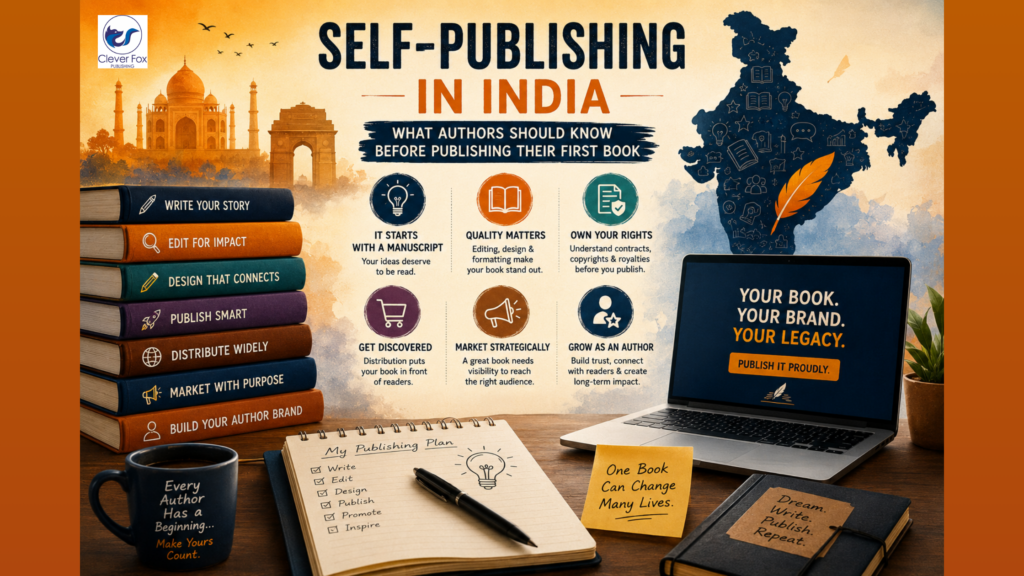
Your manuscript is the foundation. Editing improves it. Design gives it a visual identity. Metadata improves discoverability. Distribution puts it in front of readers. Marketing creates awareness. And your author brand can continue building opportunities long after publication.
If you are comparing the top self-publishing companies in India, don’t ask only, “How much does publishing cost?”
Ask the more important questions:
What am I receiving?
Who owns my rights?
Where will my book reach readers?
How will my book be positioned?
What support will I receive after publication?
For authors considering hybrid publishing or independent publishing, making an informed decision at the beginning can significantly improve the overall publishing experience.
Your book deserves more than simply being printed.
It deserves to be professionally positioned, discoverable, accessible, and presented to the right readers.